The Hidden Microphone Already Inside Your Walls: How Researchers Turned Internet Cables Into Spy Devices

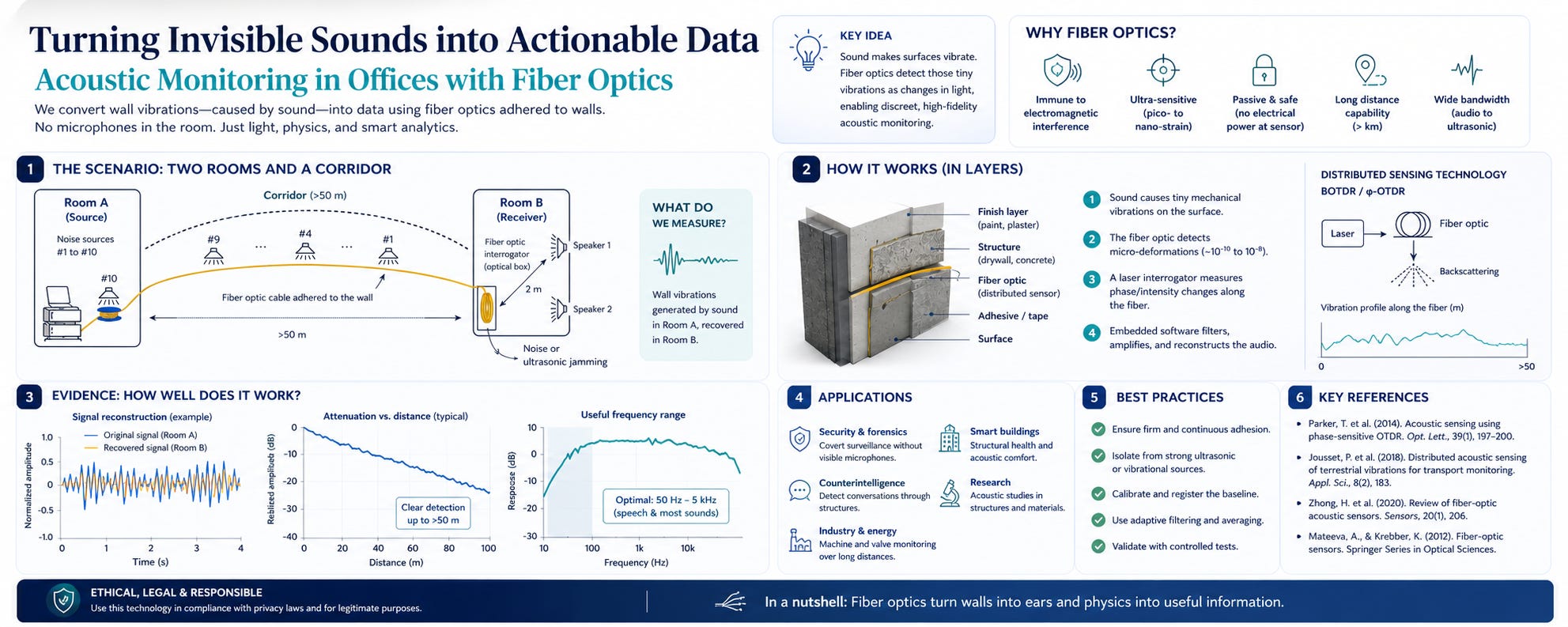
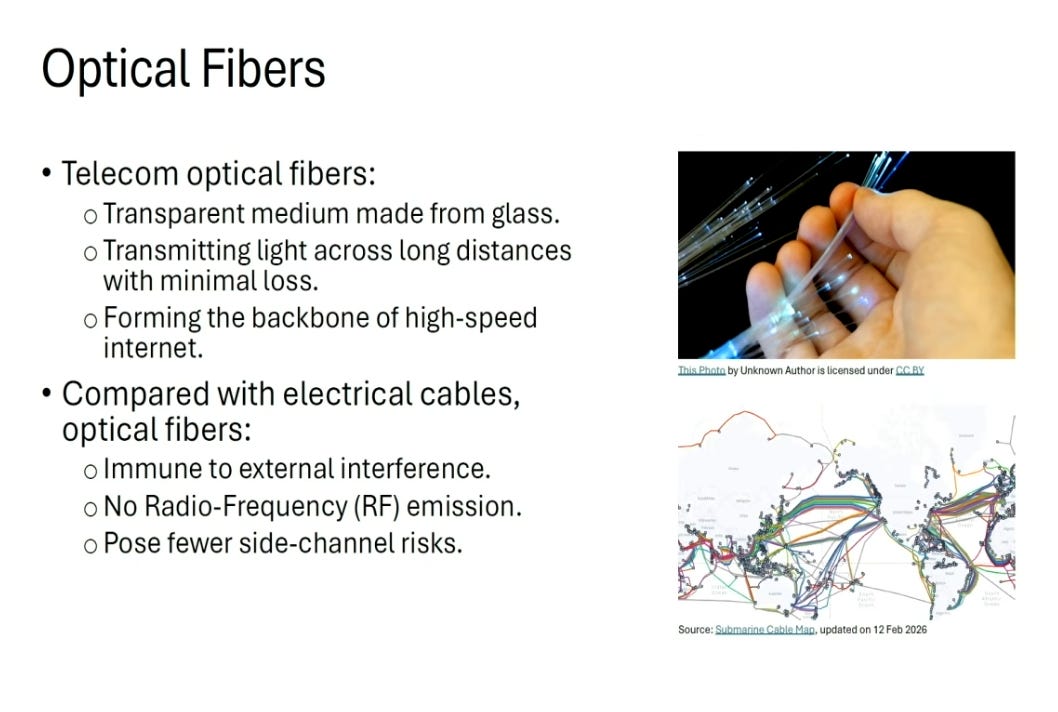
You probably trust the thin glass cable that runs from the street into your apartment. It carries your internet. It looks harmless. Most people never think about it again after the installer leaves.
A team of researchers from Hong Kong just proved that same cable can listen to every conversation in your home — and no bug sweeper, no jammer, and no security audit you’ve ever heard of can detect it.
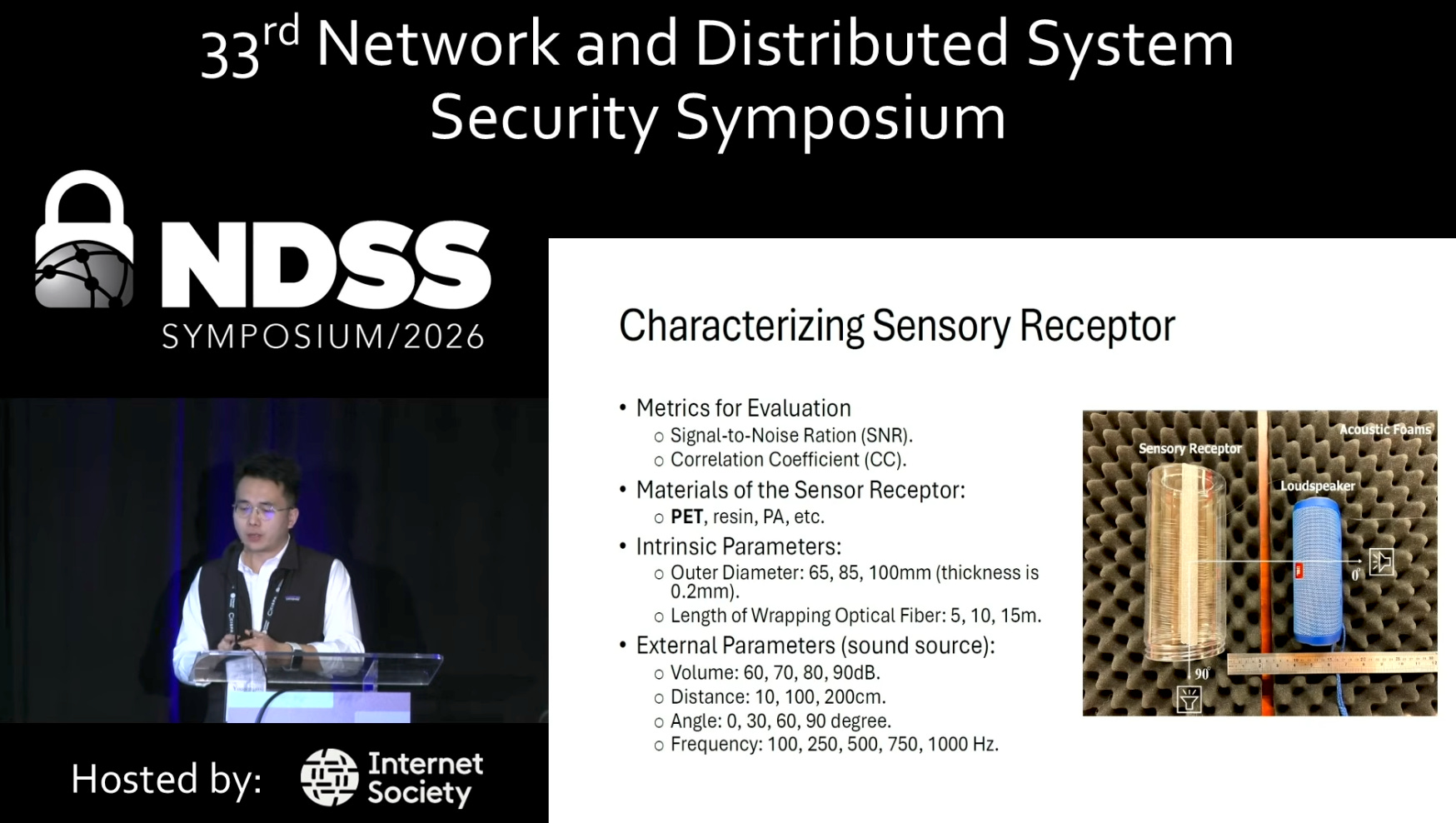
Their paper, “Hiding an Ear in Plain Sight,” was presented at NDSS 2026 in San Diego in February — one of the four most respected cybersecurity conferences in the world. This wasn’t a lab fantasy. They built it, hid it, and ran it in a real office. It worked.
How a piece of glass becomes an ear
When you talk in a room, your voice doesn’t just travel through air. The sound waves bump into everything around you — walls, furniture, the cables snaking along your baseboard. Each thing vibrates a tiny bit. You can’t feel it. A sensitive enough instrument can.
Fiber-optic cable is essentially a hair-thin strand of glass that carries pulses of laser light. When the cable vibrates, it disturbs the laser light traveling inside it. Those disturbances are measurable. A device called a Distributed Acoustic Sensing system — already used by oil companies and railways for decades — can read those disturbances and turn them back into recognizable sound.
The catch: a normal fiber lying flat against your baseboard is too thin and too stiff to pick up speech well. Sound fades fast in air. The cable barely moves.
So the researchers built a workaround.
The “Sensory Receptor”
They call it a Sensory Receptor. It’s nothing fancy. A 65-millimeter plastic cylinder with about 15 meters of fiber wound around it. The cylinder catches and amplifies sound waves, like the body of a guitar. The wound fiber registers every micro-vibration.
Here’s the part that should make you uncomfortable.
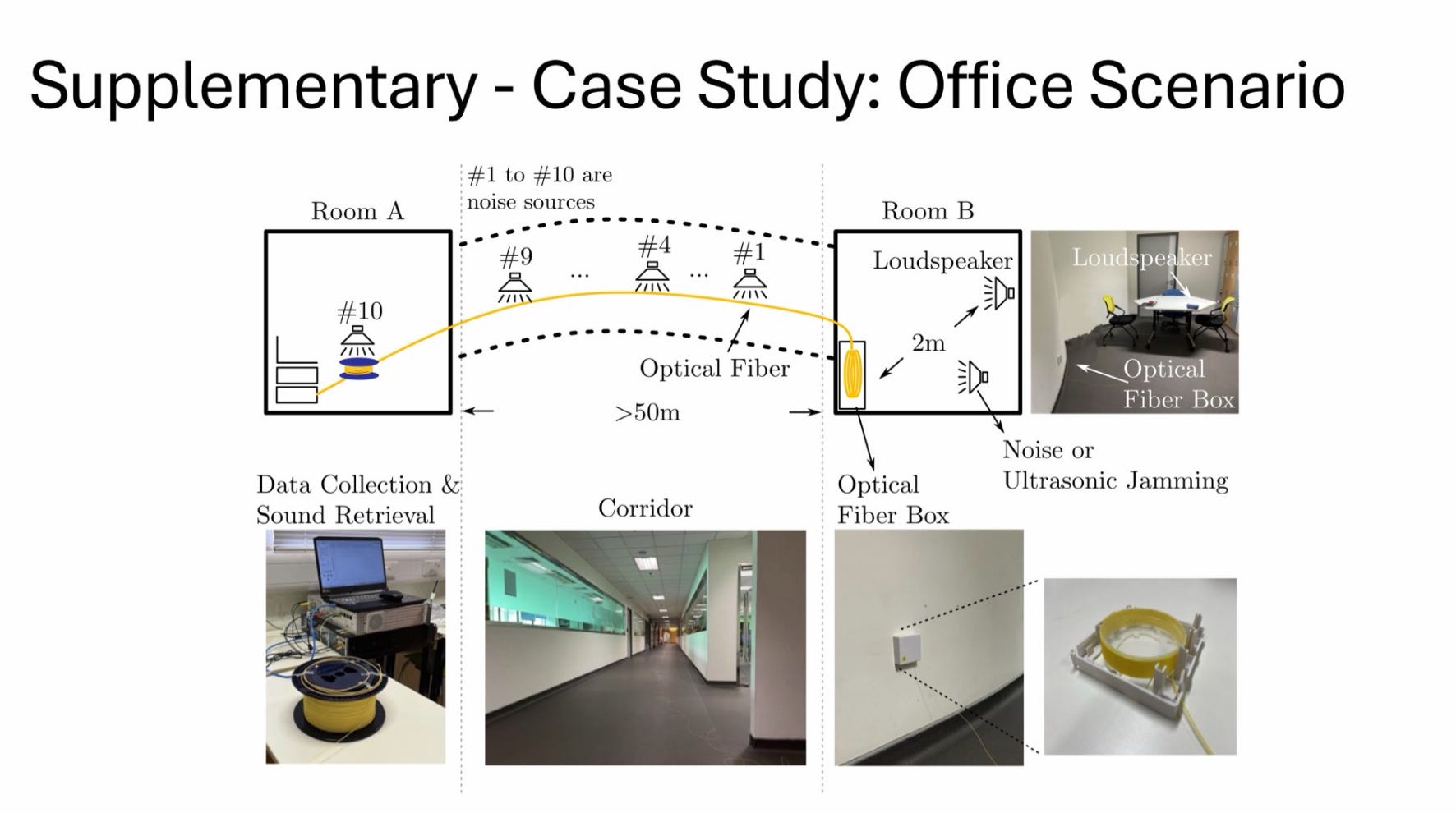
That little plastic cylinder is small enough to hide inside the fiber junction box your internet installer leaves on the wall — the same gray plastic enclosure where they coil up the extra cable. The one you walked past on the way to bed last night. The one you’ve never opened.
Once it’s in there, it looks identical to the harmless coil of leftover fiber that’s already supposed to be there. No installer would notice. No tenant would notice. Most IT teams wouldn’t notice.
What it can actually hear
The researchers ran their attack in a real office. They put the receptor inside a fiber junction box on the wall. They placed the listening equipment more than 50 meters away in another room. Then they had people talk.
Here’s what they got:
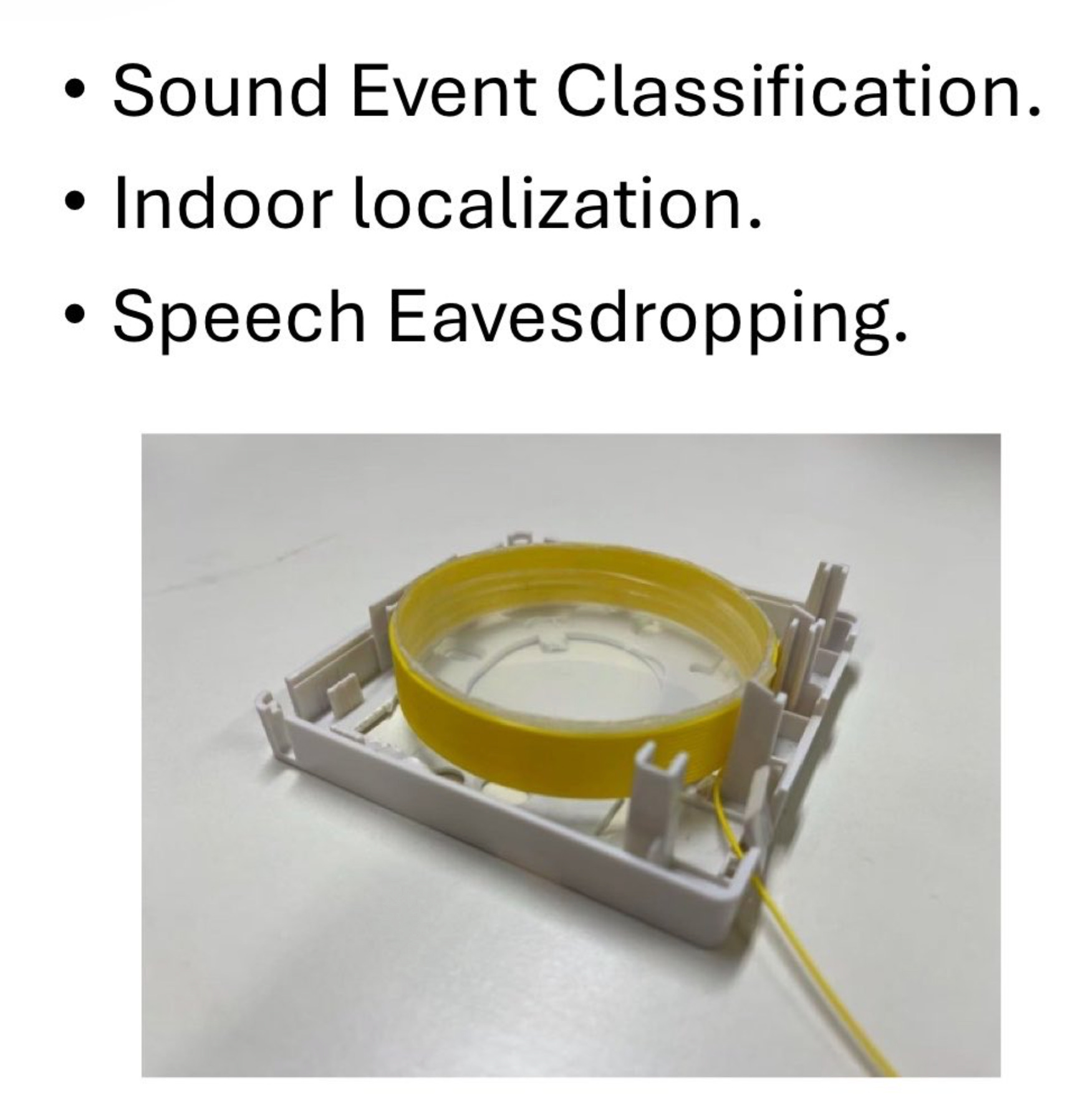
Daily activity recognition: 83% accuracy. Typing, walking, snoring, washing dishes — the system could tell what was happening in the room.
Sound location: accurate to within about one meter. It knew where in the room the noise was coming from.
Conversation recovery: around 80% of spoken dialogue was recoverable from meters away.
In plain language: an attacker sitting in another building can know who is in your office, where they’re sitting, and roughly four out of every five words they say.
Why this is different from anything you’ve defended against
Hidden microphones leak signals. They use batteries. They transmit over radio. They have circuits that bug-sweeping equipment is specifically built to detect. That’s why corporate boardrooms and government buildings get swept regularly.
This attack does none of that.
No electricity. The fiber doesn’t need power.
No radio signal. Nothing is being broadcast out of the room.
No metal circuitry. Bug detectors find nothing.
Ultrasonic jammers do nothing. The researchers tested a commercial jammer right next to their device. Zero effect.
The defenses built to protect sensitive meetings — the white-noise generators, the RF scanners, the ultrasonic emitters mounted in conference rooms — are all looking in the wrong direction. They were designed to block microphones, not glass.
This is the part of the story that matters most. Every defensive measure currently sold to executives, lawyers, journalists, and government officials assumes the spy device emits something. This one emits nothing. It just sits there, silent, while the laser inside it does the work.
What you can do tonight
You don’t need to be a senator or a CEO to take this seriously. The same cable runs into apartments, home offices, and small businesses everywhere fiber internet has been installed. If you handle anything sensitive — client information, family conversations, business strategy, journalism, legal work — these steps are worth a phone call to your IT person or installer.
1. Don’t let coiled fiber sit inside a sensitive room. When the installer comes, ask them to coil the slack inside the wall, in a sealed box outside the room, or in a utility closet. Never on the office wall. Never near the desk.
2. Ask about polished fiber connectors and optical isolators. Both make this attack significantly harder. Any decent telecom installer will know what these are. If yours doesn’t, find a better one.
3. Keep fiber runs away from desks and resonant walls. Drywall vibrates. So do thin doors and hollow ceilings. Route the cable through structural walls or above a real ceiling, not along the baseboard of the conference room.
4. For genuinely sensitive spaces — soundproof the route. If you run an office where lawyers, doctors, journalists, or government contractors actually work, the walls and ceilings carrying fiber should be acoustically dampened. Standard SCIF-grade soundproofing already blocks this attack.
5. Inspect the junction box. Open it. See what’s inside. If there’s a small cylinder wound with fiber that doesn’t match the rest of the install — that’s not normal slack. That’s the bug.
The bigger picture
The thing to sit with is this: the technology to do this has existed for years. The fiber is in your wall already. The DAS readout equipment is commercially available. What the Hong Kong team published wasn’t an invention. It was a demonstration. They showed that the pieces are all sitting there waiting to be assembled — and that nobody on the defending side was watching for it.
The infrastructure that connects you to the world can also be the thing that listens to you in it. That’s not paranoia. That’s a peer-reviewed paper from one of the top security conferences on Earth.
The good news is that once you know the attack exists, the defenses are mostly common sense — keep the fiber out of the room, inspect the box, soundproof what matters. The bad news is that until this paper came out, almost nobody knew to look.
Now you do.
Source: Hiding an Ear in Plain Sight: On the Practicality and Implications of Acoustic Eavesdropping with Telecom Fiber Optic Cables. The Hong Kong Polytechnic University, The Chinese University of Hong Kong, and the Technological and Higher Education Institute of Hong Kong. Presented at the Network and Distributed System Security Symposium (NDSS) 2026, San Diego, California, February 2026.